Pruning olive trees is an investment in the health of the tree and in the quality of the olives that will later be turned into oil. A well-cared-for olive tree produces healthier fruit, guarantees a bountiful harvest and yields oil with greater flavor and aroma.
When to prune olive trees?
The right time for pruning depends on the variety of olive tree, the climate and the objectives of the crop, but there are general guidelines that should be followed.
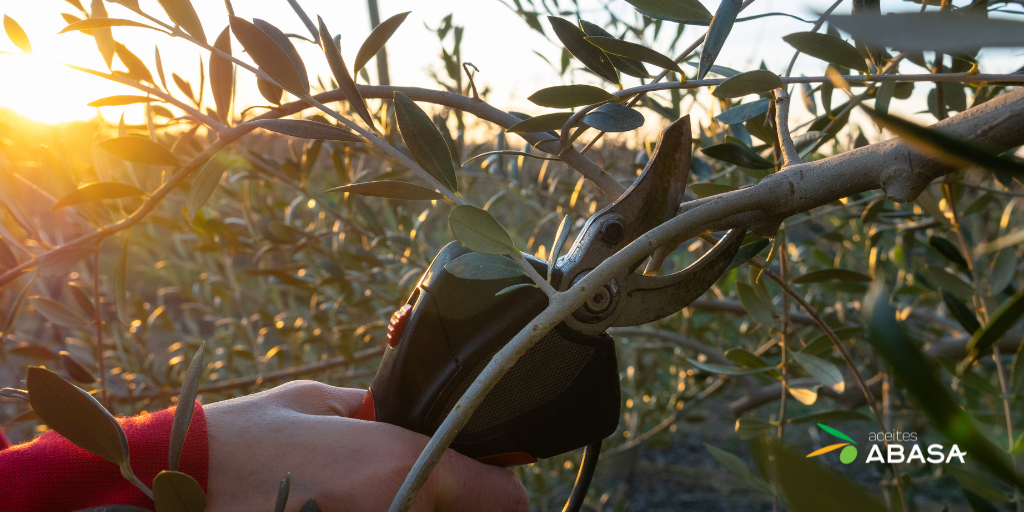
Winter pruning, between December and March, coincides with the dormant period. It is ideal for removing dry, diseased or poorly formed branches and strengthening the main structure of the tree.
Summer pruning, from June to August, focuses on removing shoots that compete with productive branches, concentrating the tree’s energy on the fruit and reducing the risk of disease. It is essential to avoid pruning during heavy frosts so as not to damage the cuts or delay the recovery of the olive tree.
How to prune effectively
The main purpose of pruning is to improve the tree’s aeration and sun exposure. Removing unnecessary branches allows more light to enter and reduces internal humidity, which decreases the appearance of pests and fungi.
Keeping the center of the olive tree clear allows light to reach all the branches, ensuring uniform fruit development. It is important to respect the natural shape of the tree and enhance its structure without deforming it. In addition, tools must be sharp and disinfected to prevent infection.
During summer pruning, it is advisable to remove young shoots that grow vertically, as they consume energy that should be allocated to productive branches and the formation of quality olives.
The relationship between pruning and harvesting
Proper pruning not only improves the health of the tree, but also directly influences the quantity and quality of the harvest. By optimizing the distribution of branches and fruits, each olive receives the necessary light and nutrients. This results in a more aromatic oil with better color and superior organoleptic properties.
In addition, a well-pruned olive tree facilitates harvesting, whether manual or mechanical and prolongs the productive life of the tree, ensuring sustainable harvests year after year.
Other factors affecting the harvest
Although pruning is essential, it is not the only factor that determines the success of the harvest:
- Irrigation and fertilization: Maintaining an adequate balance of water and nutrients helps the tree produce healthy and resistant fruit.
- Pest and disease control: Constant monitoring and responsible use of phytosanitary treatments are essential to prevent damage that affects production.
- Olive tree variety: Each variety has its own characteristics in terms of productivity, oil flavor and pest resistance. Knowing these characteristics allows you to adapt pruning and care to their specific needs.
- Harvesting at the right time: The degree of ripeness of the olive directly influences the flavor and quality of the oil.
Benefits of proper pruning
Pruning not only improves the harvest: it also strengthens the tree, facilitates aeration and light access, reduces disease and allows for balanced branch and fruit development. A well-cared-for olive tree produces healthier fruit and tastier, more nutritious oil.
Pruning an olive tree is not just physical work, it is strategic care that directly impacts the quality of the oil. By combining pruning, irrigation, pest control and harvesting at the right time, producers can maximize their yield and obtain excellent extra virgin olive oil.