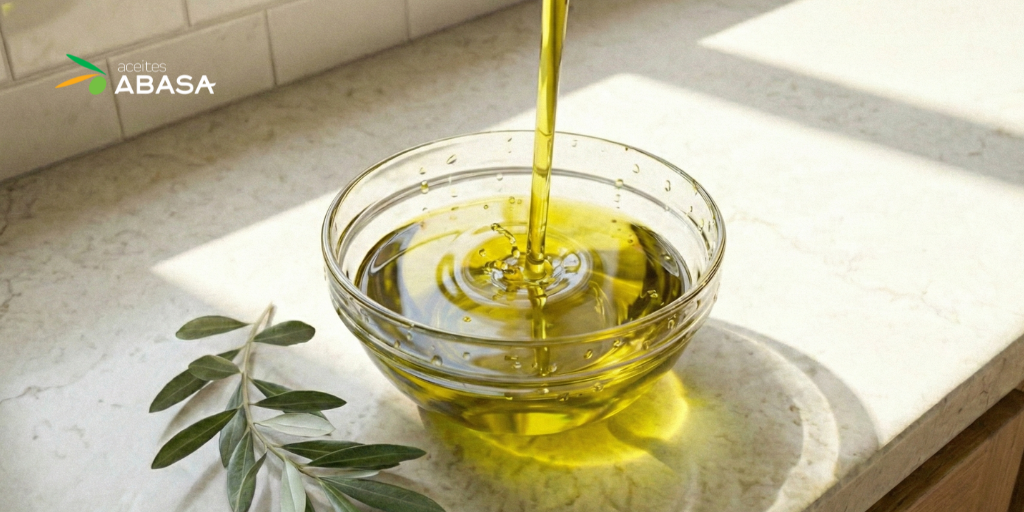
In the universe of olive oil, fundamental guidelines have been established for tasting premium oil. In the market, you’ll find various types of oil, from olive pomace oil to extra virgin, each with its own quality characteristics. But, once it reaches the table, how do you conduct a tasting to fully appreciate all the organoleptic properties of olive oil?
At Aceites ABASA, we’re here to guide you on this fascinating journey. Below, we present 6 key steps that will help you perfect the art of olive oil tasting.
6 key steps for olive oil tasting
1- Materials
Precisely select the essential elements, emphasizing the importance of choosing a tasting glass with a wide base. This glass should be slightly wider than the cup serving as a lid, ensuring that aromas are properly retained. Opt for a dark glass to avoid perceiving the color of the oil, remembering that hue does not correlate with quality.
2- Temper the glass
To fully appreciate the oil, maintaining its content at a key temperature of 28º is crucial. After pouring the oil into the glass, spend approximately 30 seconds swirling it with your hands, contributing to reaching the optimal temperature for evaluation.
3- Move the oil
Without removing the clock glass from the glass, make gentle circular movements with the container, ensuring that the oil uniformly coats all walls. This process aims to effectively stimulate the aromas for a complete sensory experience.
4- Smell the olive oil
After heating and swirling the oil, uncover the container and immerse your nose to appreciate, through olfactory analysis, the intensity and complexity of the product. Identify the direct aromatic notes it evokes, thus enriching your sensory experience.”
5- Taste the oil
After this initial impression, complete the olive oil assessment process with a gustatory analysis through the palate. Taste the oil, moving it throughout your mouth and ingesting it. Through this step, you can refine the attributes of intensity and complexity perceived in the nose. Additionally, notice the degree of bitterness or spiciness, the density, and the retronasal persistence, how long these sensations linger after ingestion.
6- Final part of the tasting
This crucial stage of the tasting is colloquially referred to as “stripping” which involves a series of short and repeated inhalations through the mouth, allowing the oil in the oral cavity to oxygenate, enhancing the perception of its volatile aromatic components. At this moment, you’ll be able to grasp all the nuances of flavors and aromas: bitter, sweet, sour, salty, and spicy. To fully enjoy the oil, you can even consume it.
At Aceites ABASA, we understand the importance of fully appreciating all the organoleptic properties of quality olive oil. Therefore, we invite you to explore beyond these keys and discover the diversity of our products on our website. Immerse yourself in the world of flavors, aromas, and textures offered by our oils, and let each drop tell a unique story.
Discover more at Aceites ABASA – Product Catalog.