Every year, between the end of April and the beginning of June, the olive groves enter one of the most delicate and decisive phases of their cycle: flowering. This is when the productive potential of the season is defined and, to a large extent, the quality of the future Extra Virgin Olive Oil (EVOO). In this article we will discuss the fundamental role played by the olive blossom in production.
A cycle that begins with the blossom
Flowering marks the beginning of the olive tree’s reproductive process and determines the number of fruits that the tree will be able to develop. Although the focus is usually on harvesting and milling, the success of a campaign begins much earlier, with the first flowers.
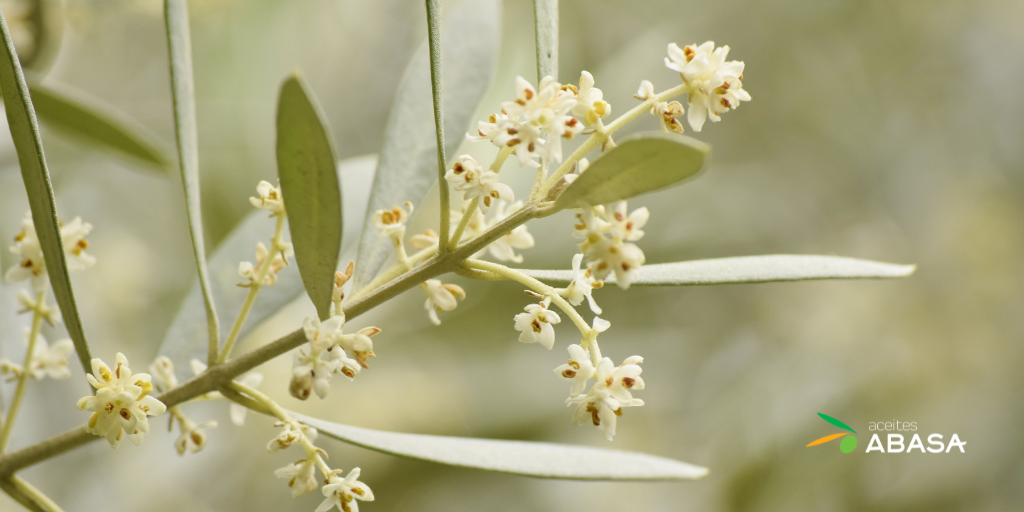
The olive blossom, organised in inflorescences or clusters known as panicles, can contain between 10 and 40 flowers. However, not all of them will become fruit. Only part of them will be fertilised and evolve into olives. Understanding flowering is therefore key to predicting yield and applying effective agronomic strategies.
A process sensitive to multiple factors
The flowering of the olive tree is extremely sensitive to external factors such as the weather, and any alteration in this phase can compromise the harvest:
- High temperatures or late frosts can damage the flowering organs.
- Excessive rain or wind during pollination can hinder fertilisation.
- Water deficit in the preceding weeks can limit flower development.
- Lack of key nutrients, such as boron or nitrogen, can reduce the number of viable flowers.
Good management of the olive grove, in terms of fertilisation, pruning, irrigation and phytosanitary control, is essential to ensure balanced flowering and correct fruit formation.
Pollination: a critical stage
Most olive varieties are anemophilous, meaning that their pollination depends on the wind. This means that, unlike other crops, insect intervention is not required, but stable environmental conditions are necessary during this period.
Production alternation and alternation in yield
The olive tree has an alternating production behavior: after a year with a high yield, it usually follows a year with a lower yield. This phenomenon, known as alternation, is related to the energy expenditure involved in fruiting. During a year of high load, the tree may invest fewer resources in flower induction for the following year, affecting the quantity and quality of flowers. Management techniques aimed at reducing alternate bearing, such as balanced pruning, regulated irrigation or thinning, have a direct effect on flowering.
Direct impact on EVOO
Each flower that succeeds in becoming a fruit contributes to the yield and quality of the oil. But it’s not just about producing more olives, it’s about producing better olives. Balanced flowering, accompanied by correct fertilisation, results in fruit with a higher fat content, a better organoleptic profile and less oxidative stress.
Optimal fruit development is reflected in the ripening index, polyphenol concentration, acidity and aroma of the EVOO. In summary, good flowering is the first step towards a superior quality oil.
The olive blossom is in fact the invisible pillar on which the entire EVOO production process is built. It is there, in that ephemeral moment in spring, where the story of each harvest begins. At Aceites ABASA we know that excellence cannot be improvised, that is why we value each stage of the olive tree cycle as an essential part of the path that leads us to offer an Extra Virgin Olive Oil of exceptional quality.