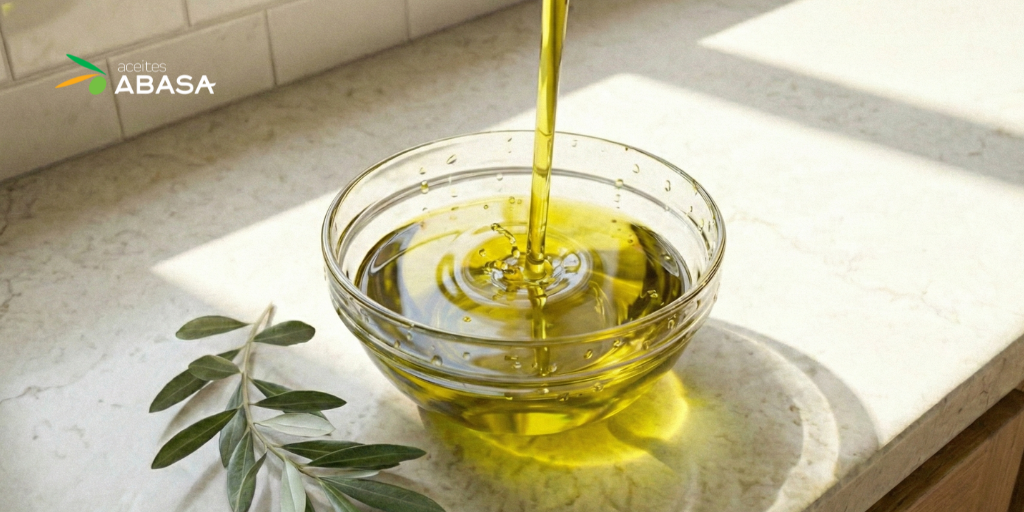
Olive oil is a mainstay in global cuisine, and within its diversity, refined olive oil occupies an essential place in the food industry. This type of oil offers highly valued properties for the production of a wide range of products. But what defines it, how is it produced and what are its key characteristics?
Origin: the basis of refined oil
Refined olive oil is obtained from virgin olive oils that have undergone some alteration in their characteristics, such as higher acidity or certain nuances in flavor or aroma. Unlike Extra Virgin Olive Oil (EVOO), which is consumed as is, these oils are the perfect raw material for an improvement process that prepares them for wider use in industry.
How it is made: a process of refinement
To correct these characteristics and achieve a versatile oil, the initial virgin oil undergoes a controlled refining process. This process, although it includes several physico-chemical stages. It is safe and designed to purify the oil without altering its fatty acid composition. The main stages are:
- Deacidification/Neutralization: Acidity is adjusted to bring it down to very low levels.
- Discoloration: Natural pigments are removed to obtain a more uniform and paler color.
- Deodorization: Volatile compounds that may cause undesirable odors or flavors are removed, resulting in a neutral profile.
It is essential to highlight that this process produces an oil that complies with all safety and quality regulations for human consumption. It is a reliable and widely used ingredient in the industry.
Distinctive properties and characteristics
The refining process gives refined olive oil properties that are highly valued in various applications:
- Neutral flavor and aroma: Its main characteristic is the absence of intense flavors and aromas. This makes it a perfect ingredient for not altering the taste profile of other foods.
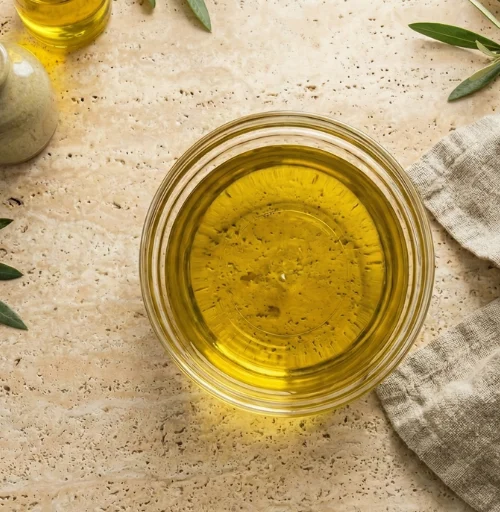
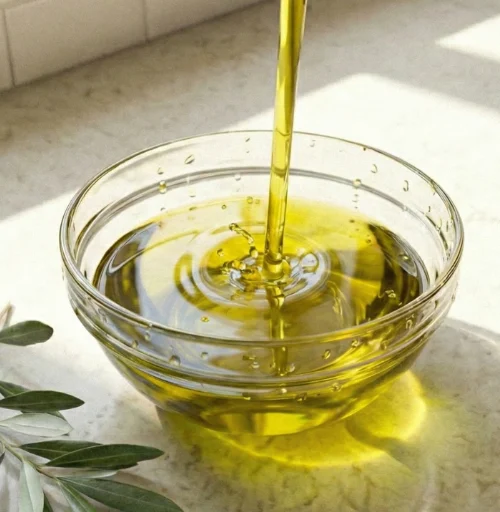
- Pale color: It presents a very light yellow color or almost transparent.
- Very low acidity: Its low acidity level (less than 0.3%) contributes to its stability.
- High thermal stability: It has a high smoke point, which makes it ideal for frying and cooking at high temperatures. It also maintains its quality and resists degradation.
- Lipid composition: It retains most of its beneficial fatty acids, such as oleic acid.
Key uses and applications
The neutrality and stability of refined olive oil make it an indispensable and versatile ingredient in the production of a multitude of food products:
- Base for processed products: It is the ideal base for the manufacture of margarines, spreads, mayonnaise, sauces and a wide variety of processed foods that require an oil with no flavor of its own.
- Industrial frying: Its resistance to high temperatures is key in large-scale frying processes, both in industry and catering, ensuring crispy and stable results.
- Bakery and pastries: Its neutrality is perfect for the production of bread, cookies and pastry products.
In conclusion, refined olive oil is an essential and versatile product in the food sector. Thanks to its unique properties of neutrality and stability, it plays an irreplaceable role as a functional ingredient in the preparation of many products that are part of our daily diet, contributing to the quality and variety of the food supply.