When we think of olive oil, we immediately associate it with health, flavor and tradition. We call it “liquid gold” and no wonder: this star product of the Mediterranean diet is the result of a fascinating natural process that occurs within the fruit of the olive tree itself. In this article, we invite you to discover what lipogenesis is and how it turns a simple olive into one of the most valued foods in the world.
What is lipogenesis?
Lipogenesis is the metabolic process by which olive cells synthesize lipids, i.e. fats. In the case of the olive, this mechanism takes place mainly in the mesocarp, the fleshy part of the fruit, and intensifies as the olive ripens.
During this phase, the cells convert sugars and other metabolic precursors into triglycerides, which are stored in the form of small oil droplets. This oil will later be extracted by mechanical processes to obtain the extra virgin olive oil we know.
The stages of fruit development
The process of oil accumulation does not occur from the beginning, it occurs while it’s developing. First, the olive fruit must develop and reach a key point of ripening. It is at this point that lipogenesis is activated most intensely.
The veraison phase, when the olive begins to change color, marks the beginning of the peak of lipogenic activity. During this period, the oil content can multiply rapidly, influenced by internal factors (genetics of the variety) and external factors (climate, irrigation, altitude, soil type, etc.).
What type of fats does the olive produce?
The main fat that accumulates in olives is oleic acid, a monounsaturated fatty acid that is very beneficial for cardiovascular health. But other fatty acids such as linoleic (polyunsaturated) and palmitic (saturated) are also present, in different proportions depending on the variety.
In addition, secondary bioactive compounds of great nutritional value are generated during lipogenesis:
- Polyphenols: as oleuropein, oleacein and oleocanthal.
- Tocopherols: vitamin E.
- Squalene: with antioxidant properties.
All these compounds are what give extra virgin olive oil its unique properties in terms of flavor, aroma and health benefits.
Factors influencing lipogenesis
The ability of an olive to accumulate oil is not uniform. It is influenced by:
- The variety of the olive tree: e.g. picual, arbequina or hojiblanca.
- The time of harvest: harvesting too early or too late can affect both the yield and the quality of the oil.
- Controlled water stress: which can increase the concentration of polyphenols.
- Climatic and soil conditions.
Understanding these factors is essential for growers seeking the highest quality oils.
From fruit to oil: extraction of the “liquid gold ”
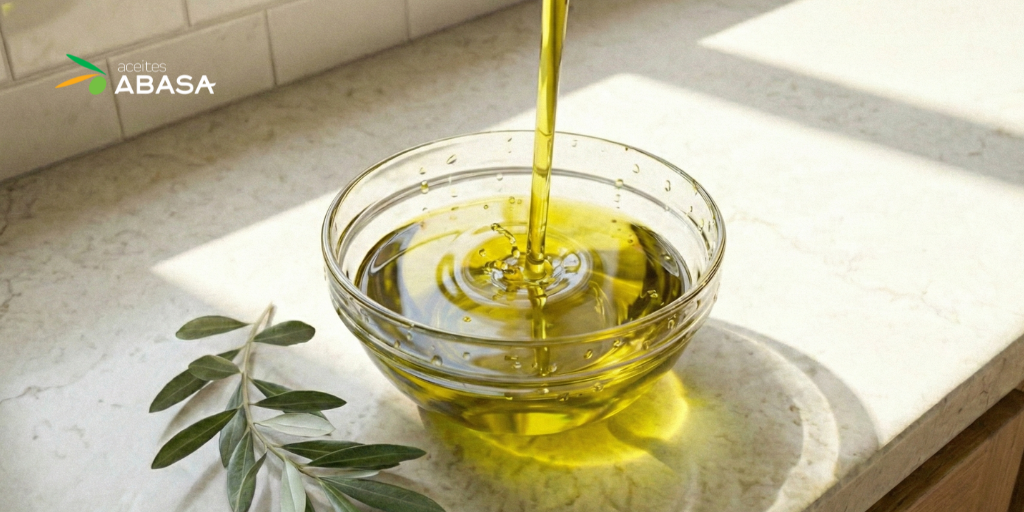
Once the natural process of lipogenesis is complete, it is time to extract the oil. This is done by mechanical procedures. The result is extra virgin olive oil, the pure juice of the olive, with its properties intact.
From the inside of an olive to the bottle, there is a complex natural process: lipogenesis. This transformation turns the fruit of the olive tree into an essential food for health and a symbol of our Mediterranean culture. Behind every drop of extra virgin olive oil, there is science, tradition and nature working in perfect harmony.